Showing posts with label Education Tips. Show all posts

Tuesday, September 18, 2018

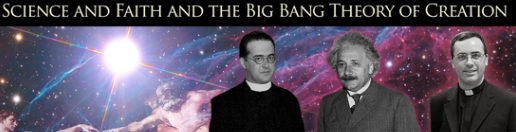
Faith and the Big Bang Theory of Creation

Scientists have faith that a random and spontaneous Big Bang, followed by Nucleo-Synthesis in expanding dark matter coalesced to form the Universe over 4 billion years ago. Steady State Theory has recently been abandoned for an acceptance that a universal resonant frequency is the "echo" of the bang. They have faith that in this rapid expansion of the universe, the Sun spontaneously ignited and held certain matter in its orbit. After closer examination they are now reporting that the universal temperature is a constant. 
They have now reduced the time for the formation of the universe and the elements to less than 3 minutes in order to compensate for the cooling affect over time. Then they say several billion years later that the Planets randomly formed by meteor collisions that coalesced into solid spheres. We are then asked to have faith that one particular random coalescence led to the formation of the Earth and Moon at the exact distance from the Sun necessary to support organic life. 
Then they say that billions of years ago ice carrying comets struck the earth and deposited more minerals and nutrients to support the extraterrestrial amino and nucleic acids deposited by subsequent meteors. Then the earth was almost completely covered by water. Some water was salty, and some water was fresh. Scientists have now discovered that at some time or another, every continent of the face of the earth was under salt water. So when the water recedes we are to have faith that lightning struck some rancid fresh water and the amino acids began to form single celled life;
And that those cells randomly evolved into a life form capable of climbing onto land and breath oxygen from evolved lungs; and then those organisms evolved into Dinosaurs; and then a random meteorite shower or an instantaneous global volcanic activity, or a disease, or all of the above destroyed the dinosaurs; and then the Earth was covered by salt water; again; then it receded; and then some lightning hit the new rancid fresh water; and new amino acids formed to make new life forms. And this completely new form of life of evolved to breath on land and that some of those life forms eventually walked upright and then one of those life forms built a rocket and traveled to the moon in search of new life forms.
That's faith. Faith is the position no matter which side of the argument one is on. The cumulative probability of each of these independent scientific evolutionary phenomena resulting in life is immeasurable. The probability that an Omniscient Spiritual Force created the universe is 50/50. It either happened or it did not. The concept that modern Humans evolved from simple microorganisms to form complex ideologies regarding their existence is in itself a mythology. 
The advent of published evolutionary thought is assigned to the Greek philosopher Anaximander (610 - 546 B.C.). He is believed to be the first to hypothesize and publish that Humans evolved from aquatic life forms. The Chinese philosopher Chuang Tsu (≈ 350 B.C.) was first to publish the concept that life forms have the innate ability to transform and adapt to their surroundings.
Western Science does not discover "evolution" until 1858 when Charles Darwin and Alfred Wallace race to publish Tsu's 2,000-year-old theory. The case for evolutionary theory is limited. The concept that individual organic organisms exist in isolation is also evidence for divine creation, as it supposes that individual organisms were created for the conditions in which they were intended to exist.
The Evolution argument also lacks the sufficient transitional fossil evidence necessary to prove that aquatic organisms mutated into Humans. Every fossil is unique to its location and time. There are no fossilized remains to show a definite transition in any species. The debate for the creation of the universe is currently grounded in scientific theories and known observational "facts." The Evolutionists believe that the universe exploded into existence. Creation Science claims the universe was spoken into existence.
The Genesis Revelation: A Scientifically Correct Translation of the Hebrew Book of Genesis, A Consolidated Mythological History of the Antediluvian World, And The Most Comprehensive Argument for Creation Science Ever Written
The Mystery of The Anointed Messiah and Divine Creation are the most controversial and misunderstood subjects known to Humankind. For thousands of years, Scientists, Theologians, and Laypersons alike have studied the Holy Bible in search of logical and practical solutions for these and the many other Biblical mysteries. Creationism is the original theory for existence and the advent of scientific thought has rendered the current case for creation impotent in light of the evidences. 
The theory that the Earth and all life on it were created in 6 actual days is incomprehensible to this new and more learned generation of faithful, skeptics, and agnostics. They seek a spiritual truth that is more consistent with what we have discovered about the Universe. The current Translation is scientifically archaic and skewed by the Old Testament Tradition that served as its basis. 
The original Hebrew and Greek languages tell a completely different story. The Universe and Planet Earth are as old as they need to be to look the way they do. The Authors of the Ancient Manuscript understood this and they properly communicated these ideas in Hebrew and Greek. It is time for a scientifically credible translation of Genesis. The Genesis Revelation will provide one.

Are Annuities Offered by Insurance Companies Safe?

The election is over but the economic and financial fundamentals have not changed. Nor is change expected until the bailout programs loosen the credit market, the recession (or worse) runs its course and economic downsizing reverses directions. Meanwhile, as I mentioned in this retirement blog, the market is unpredictably volatile, retirement accounts are down 40% to 50% from their 2007 highs and market investments are exceptionally risky. If consumers tighten their collective belts between Thanksgiving and Christmas as is forecast, expect a decided nasty turn in the stock market, shrinking jobs, falling incomes and corporate failures. Where is a safe place for retirement assets?
The part of the financial services industry that has largely escaped financial trauma has been life insurance companies. Granted, AIG Corporate failed but their troubles were not related to "insurance" but to unregulated Credit Default Swaps. The insurance subsidiaries of AIG suffered "guilt by association" but have maintained their financial strength rating as independent entities. 

No doubt these insurance subsidiaries will be the primary assets that are sold to repay the bailout loan extended to AIG Corporate by the federal government. You're probably asking questions about the solvency of the insurance industry and the safety of their products, especially fixed annuities. Let's take a safety tour of insurance companies.
First and foremost, insurance companies have an operating history of stability that is the envy of banks and brokerage firms. Their investments are limited to conservative, boring options that rarely carry inordinate market risks. The products they offer must first be approved by the state Insurance Commissioner to assure suitability for the general public and guard the insurance company's solvency. There have been failures - mostly small - that have occurred in troubling economic times. When failure seems likely or actually occurs, the home-state Insurance Commissioner swings into action armed with powerful regulatory might. Insurance 
Commissioners have the power to levy fees on other insurance companies operating in the state to pay for rehabilitation, merger or liquidation of failed insurance companies. This system has worked flawlessly, because not one insurance policyholder has lost a penny of their invested principal with an insurance company. Bear in mind, insurance companies have survived world wars, global depressions, scandals, government failures and stock market meltdowns. Americans have insured their homes, cars, health, life, business and retirement nest eggs without fear of safety.
What about fixed rate and index-linked annuities? Again, never has a fixed annuity holder lost a penny due to market losses. Not only is there a clearly stated guaranteed minimum rate of interest, but index-linked annuities offer the potential to earn extra if the market-linked index rises. What's more, if the market index falls - and that has been the case in the current market meltdown - the annuity is guaranteed not to lose value. 
In addition to no market losses, annuity owners get income tax deferral on earnings until withdrawal, protection from creditors in most states, probate-free transfers at death, the right to convert to a guaranteed lifetime income, penalty-free withdrawals to cover emergencies and total control over their money if circumstances change.
Fixed annuities, especially index-linked annuities, have gotten a bad rap from Wall Street in recent years, primarily because their popularity has taken mutual fund and variable annuity sales away from stock brokers. While the current meltdown has created massive losses for market investments, fixed annuities are loss free, earn a guaranteed rate at a minimum and will pay extra interest if the market recovers. Annuity owners are not postponing retirement, leaving retirement to find jobs or spending sleepless nights worrying about market losses. Savers will never get rich by choosing fixed annuities, but may very well stay rich.
Don't be surprised if the financial professional who introduced you to annuities calls and says: "your money is safe, and you have no losses - if the market recovers, you'll do even better". It might be a good time to think about converting more of your "market" money to fixed annuities. Stock broker don't have much good news these days because if you followed their advice you have massive losses. 
Of course, they are still giving you advice about where to put, or keep, your money - I suppose the theory is "the more they're wrong the higher the probability they'll guess right next time". I don't like that theory and neither should you. Safeguard your retirement money because "retirement is the largest purchase you'll ever make and you can't borrow the money to pay for it". Your retirement nest egg will pay for the last one-third of your life...safeguard it wisely.

How to Improve Reading Comprehension With Self-Questioning


Everyone knows that to get the right answers you need to ask the right questions. Asking questions about the text as you read significantly improves reading comprehension. "Talking to the text" improves concentration and helps the reader interact with the author. Reading becomes a two-way active process, not a one-way passive activity.
But, what questions will produce the best understanding of the text? Try these eight questions to boost your reading comprehension and retention.
1. What's the big picture here? Constantly ask how each reading section relates to the main idea(s) of the chapter.
2. What's the author going to say next? Stay one step ahead of the author by anticipating what will be said next. Prediction significantly boosts reading comprehension. Check the outcomes of your predictions as you read.
3. Think about the "expert questions" that fit the subject about which you are reading. For example: History is big on compare and contrast, cause-effect and sequence related questions. Science can ask classification, chemical and physical properties and literature might focus on theme, genre, character, and plot.
4. What questions does this information raise for me? Your questions may and should differ from the expert question as they are related to your own background knowledge and your interests. Remember that some very good questions have more than one answer!
5. What information is important here? As you read, decide which information is important enough to include in your notes.
6. How can I paraphrase and summarize this information? Translate the author's important words into your own. Use as few words as possible without changing the meaning. Do this at the end of each subtitle section in a textbook or at the end of the chapter in a novel.
7. How does this information fit with what I already know? Think about the "big picture" and how pieces of information fit together to improve reading comprehension.
8. Ask WHO, WHAT, WHERE, WHEN and WHY questions as you read. Note introduction and description of characters, major plot changes, setting descriptions and changes, and reasons given to explain important ideas.

Monday, September 17, 2018

Higher Education Opportunities for Everyone

Almost every student who appears in an examination would like to score the highest possible marks. A student who does well in examinations is regarded as intelligent, hardworking or both. We all know that it is necessary to be intelligent and hardworking in order to do well in examinations, but few realize fully that there is much more to success in examinations than merely being hardworking and intelligent. There are a number of other measures and techniques required to do well in examinations. The very best of students follow many of these techniques instinctively or by training. Knowing these techniques an average student can get brilliant results and a good one may reach the heights of excellence.
Good health, if not a robust one is an essential prerequisite to success in most things including examinations. The mind and the body are dependent upon each other. If one deteriorates, the other is likely to deteriorate sooner rather than later. A fundamental requirement for maintaining good health is physical exercise. Physical activity not only improves health but it also improves circulation of fresh healthy blood to the brain. It improves alertness and concentration, a must for a brilliant performance in any examinations. About forty minutes of brisk physical activity, five or six times a week, appears to be sufficient for most students. Too much can distract. It can reduce the time available for study. Food has an effect not only on our health but also in the way we feel and think. We may not notice this always but you can be sure that everything you eat contributes in some way to your thinking as well. We only notice the change when the effect is dramatic as for example with strong coffee or alcohol. But you can be sure that even the humble vegetable you eat has some subtle effect on your psyche and behavior. Good food is required for good health. If you have to appear in an examination this food has to be good not just for your body but for your intellect also. Yogurt or fish if available daily in a meal accompanied by vegetables, bread, rice or potatoes is one of the best foods to consume for students from an intellectual point of view. Fresh leafy vegetables such as cabbage, lettuce or spinach are full of beneficial nutrients and chlorophyll and must be included in some of the meals. Consumption of eggs as a regular part of diet helps to improve health and vitality in general.
There is no denying the fact that much study is a necessity for doing well in examinations. How much should one study? The simple answer is as much as you can. Most top ranking students spend all of their available time studying, beginning several months before an examination. However studying much does not mean missing out on other essential duties such as bathing, physical exercise, meditation etc. An adequate amount of sleep is necessary. An adequate amount of sleep is such that one does not feel sleepy during the rest of the day. Start a revision program in good time before the exams. Whilst you do not want to tire yourself out too early, leaving revision too late is a common cause for stress. Sometimes students avoid study as tiring work. However doing work often takes less effort than avoiding doing work.
A healthy respect for punctuality and time schedules is desirable for the good student. When time schedules go wrong - as they do at times - it is usually because they were planned too tightly and did not allow for sufficient flexibility: Time schedules need plenty of blank space to allow for the unexpected.
A student studies from books and classroom notes. As studies progress it is a profitable practice to make a new set of personal notes in brief outline form. This should be maintained in a separate bound register or notebook (not loose sheets). They must be made out as neatly as possible with neat headings for each topic. Never prepare these notes in a crowded style that saves paper, but rather in an open style with much white space around the written matter. Such blank spaces improve absorption of material during revisions. Blank spaces also come in handy for inserting an additional note if required. Just the process of preparing neat elegant notes will greatly assist the process of assimilating subject matter. Such notes shall also be extremely useful for last minute revisions just before the examinations.
An important thing to study besides the subject is the type and pattern of examination to be held. Each examination has its own unique pattern and that must be studied if one wishes to do well in an examination. In order to do this one has to locate question papers from previous years for the same examinations. Question papers of famous and popular examinations such as TOEFEL, GRE, GMAT, CAT, and JEE etc. are available in book forms. Often local libraries maintain old question papers of local school or college examinations. Another source is seniors who have taken that examination before. Seniors can provide useful tips besides old question papers. What if the examination is completely new and being held for the first time! In this case look up similar examinations of similar subjects. In a university, try and look up other examinations of the same Professor even in a different subject. Each Prof has his own pet peeves. Most examinations follow a pattern that they repeat year after year. Knowing the pattern in advance gives you an edge.
Some students fret and worry before an examination. A few can even work themselves up into a fever. All this happens because they have not yet developed the attitude that produces best results. The most important thing to realize is that whatever study, magic, prayer or anything else that you can do on the last day is not going to make any big difference to the results. The time for worry and study was over yesterday. There is one thing though that can effectively spoil your results now and that is worrying and fretting. That is the worst thing to do. Therefore loosen up and relax. The results will be what they will be. No academic exam is the end of a life. So what, even if one fails! Great successes often follow great failures. Get all thoughts of the results out of your mind. Leave them in the hands of the Almighty or fate if you do not believe in the Almighty. Your job now is to play your part well and the best way is to relax and do your best. Best of Luck!

Drawing Tips And Techniques

Here are some things I've found some things that has helped me draw better.
All these techniques and tips are based on Win Wengers principle of Image Streaming. Image Streaming is very useful, and I've found it especially useful to improve myself.
The Brain
Before I begin, I want to say something about the human brain. It's quite important to know what your brain can do, and what it does in order to learn to your full potential. I'm still learning more about the brain but here are some things that I've learned.
More Pleasure, Less Pain
Your brain steers away from pain, and goes towards pleasure. Most of you probably know this already, but I'll give an example anyway.

I'll give homework as an example, because everyone loves homework =D. Some people dislike doing homework because it causes them pain (ie. Boredom, confusion, other things that you don't like), but enjoy drawing because it brings the creative juices into play, and the brain is engaged, in other words pleasure. But you end up doing your homework anyway because you don't want to feel the pain of parents yelling, teacher yelling, detention, test failing etc.
Repetition, repetition, repetition
Another important thing about the brain is that is that You get more of what you reinforce". Very important rule. Example, the more you procrastinate your homework, the easier it will be to procrastinate. The more you visualize your pictures, the easier it will be to visualize it next time.
Oh yeah, fear and stress shuts off vital parts of your brain, including your creative side. So you need to be calm when you draw (though some people draw just to express themselves). Generally you do better when you approach things playfully and with curiosity (beginners mind).
Last note, everyone is unique in their learning and what they prefer. This is what has worked for me, but I know everyone is different. So I encourage people to experiment.
Enjoy Yourself!
First and foremost, you MUST ENJOY YOURSELF! =) It might sound trivial, or even common sense, isn't that why you're drawing in the first place?
But you'd be surprised of what people think when they draw. Examples of this are "I gotta make this picture good so I can show my friends", "I gotta make this good otherwise people will put me down." and another which is border-lining: "I gotta make this good so I'll be happy with my pictures". You mustn't have any fear! I know this sounds cliched but so many people fall in this trap of fear and stress and they wonder why their pictures aren't good. Though saying must might not be a good thing to say, because people may fear of fear, which happens =).
You might think this is a little stupid, but think for a moment. This "fear" is the innate fear of pain. It's this uncertainty, uncertainty to move forward, because running away is a solution to not getting pain too. This is also where the "you get more of
what you reinforce" quote. The more you run away, the easier it
will be to run away and so on and so forth.
You might lose interest after drawing for long time too. If that happens, come back to it later. But remember go back to it. If you think about it, do it. And if you don't... well you know what happens =) Of course, if you think about it and you have no easy access to it, you can visualize yourself drawing drawing. Just imagine yourself drawing, feeling the pencil and the paper.
Imagine!
Imagination is also very important to your human brain. Imagination is your brains playtime, so you shouldn't hinder it =). As a child, your imagination roams free without being hindered. Until you get "taught" at school.
Through traditional schooling, yes your conscious mind gets trained and it gets trained to focus. But your subconscious mind, the one that comes up with all these images from drawing (plus other very important information) is hindered. That is because we were all told to pay attention in class.

This meant that you had to "squelch" your unconscious mind in order to focus, as the images that come through do distract you from what you're doing.
So your wonderful mind is forgotten, and some people even "forget" how to draw up images from mind after traditional schooling. So remember, if you see something strange and some images appear, don't squelch it, let it flow and it will encourage your creative mind to keep doing what it does best.
You can read more about it here:
Drawing Tips
Finally we're up to the good stuff! Why did I ramble on about the
human brain? This is Drawing and art, right? not Psychology? Wrong! Of course, the human brain is vital to your drawing skills. Depending on your mood and condition of your mind, you can draw brilliant images, or fall into a slump or a art block. I'll tell you how to get rid of these later.
So basically, in order to draw better, knowing how the brain itself works, even a little can help. I can write a whole article on what I've learned so far on the human brain, but most of you wouldn't like that, right? =P
Anyway, if you'd like to find out more about the human brain,
Remember, don't read it because you have to, read it because you enjoy it. It makes things so much funner, and you learn more too.
Getting Rid of an Art Slump
Many people know this, and know this well =D For those people who don't know what I'm talking about, an art slump/block is when you can't draw a thing, or can't draw properly and you know you can't, so you don't.
There are a couple of solutions to this: 
  • One, it might be that you're not having fun. Surprisingly, some people might have blocks, similar to the block that people have for maths. You know that one that makes you say "Aaah~! I don't like maths, I always stuff it up! Waaah~!". This statement about yourself is quite true, but thats only because its a self-fulfilling prophesy. You made yourself think that by just saying it. Funny how the brain works =). Other reasons are probably because from a (or lots of) bad experience/s (like getting a low mark for a test, the teacher going so slow that you get bored and don't understand or ie. Someone severely criticized your work and made you feel bad). Though drawing may not be as blocked as maths, it might be there, and it's stuffing up your drawing. A way to do this is to do the Noise-removal technique in Win Wengers article - "How to Unblock Blocks and Undo Phobias". I've found this technique very useful, especially for maths =P. So if you have this artist block, use the noise-removal technique on it, and it should clear up.
  • When you have a burst of inspiration, stop what you're doing IMMEDIATELY, and start writing (or draw) things, about your inspiration. It can be an excellent picture that you have in mind, a sudden insight on how to draw clothing, or drawing in a specific way. DO THIS! It will encourage the spontaneous, creative side and it will be easier to get rid of that block. Remember "you get more of what you reinforce" =P.

    If you can't draw it or write it down, describe it out loud to yourself (or in your head). Or use your powerful tool, imagination. Imagine drawing it, or watching the events unfold or whatever.
  • One last thing, an easy way to get unblock yourself is to get inspiration from different sources. It might be from TV, an Anime, looking at pictures, a person, or even some trivial object like a tree. Waiting for this inspiration is also an option too (but it might encourage yourself to stop drawing at every slight block that you encounter, which isn't a good thing =P)
Tips on Drawing while Drawing
Here are some things I've found that has helped me a lot while
drawing.
Creative Drawing
Sometimes when you're drawing, you have an best reaction.